Der afriCult Dialog 2026
Der afriCult Dialog findet jedes Jahr vor dem Musikfestival statt. Die Veranstaltung wird seit einigen Jahren in unterschiedlichsten Formaten veranstaltet. Jedes Jahr werden unterschiedlichste Themen diskutiert, die die afrikanische Diaspora-Gemeinde stark beeinflusst.
Der Dialog soll unterschiedliche Themenfelder aufgreifen und seine Besucher neue Denkansätze geben. Inspirierend für Menschen aller Herkunft bietet der afriCult Dialog ein reiches Programm an Themenschwerpunkten an dessen Ende das finden von Lösungsansätzen zentral sind.
Für den Dialog werden immer ExpertInnen mit unterschiedlichsten Hintergrundwissen eingeladen, um zu den ausgesuchten Themen zu sprechen.
Auf den folgenden Seiten findet ihr einen Einblick in vergangene Dialogprogramm-Punkte und die Informationen des aktuellen Dialogs.
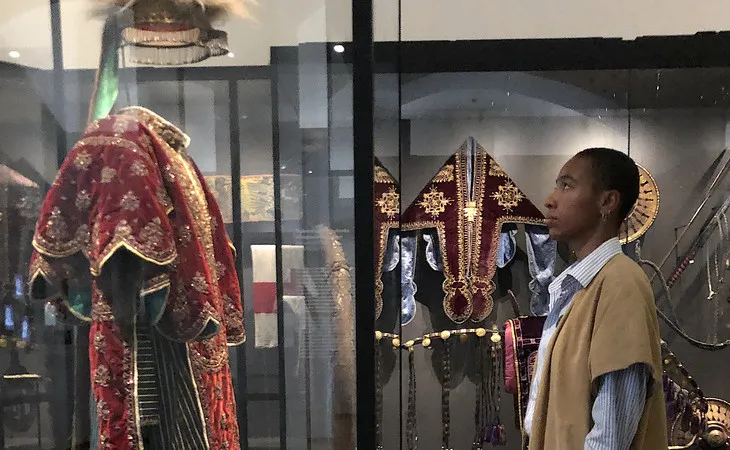
Podiumsdiskussion
The Roll of Women in the Industrial Revolution: Reality and Challenges
Wir diskutieren über die „Role of Women in Industrial Revolution: Reality and Challenges“.
1. What was the effect of Women working in factories?
2. How did women's roles change as a result of the Industrial Revolution in Europe?
3. What was the biggest problem facing women workers?
4. In what industries did most women work?
5. How did women's roles change as a result of the revolution?
Freitag 03. Juli 2026 16:00 – 19:00 Uhr
Laaerberg, „Festwiese“, Otto-Geißler-Platz, 1100 Wien
Alle Angaben ohne Gewähr. Änderungen und Irrtümer vorbehalten.
Zusammenfassung
The first half of the 19th century was a time of great change. Industrialiazation brought new opportunities for employment, changing ideas of work, and economic cycles of boom and bust. During this period, women´s roles changed dramatically. Industrialization redefined the role of women in the home, at the same time opening new opportunities for them as industrial wage earners.
In pre-industrial Era, the household was the center of production. Most families lived on farms where everyone worked to produce goods in order to survive. Within this context, the status of men and women was relatively equal. Men were the heads of households, but the role of women as caretakers and producers of goods, such as food and clothing, was equally important. With the first stages of industrialization, these patterns changed.
Increasingly, men began working outside of the home. Rather than selling goods they had produced, these workers sold their time to factory owners, who, in turn, sold the mass-produced goods. Men dominated this new realm of work. They made money – not goods – to provide for the family. Material success – how much money one could make and what they could buy with it – became a measure of a person’s worth.
Women were not paid for work in the home. With the availability of manufactured goods, a woman’s role as producer within the home was reduced. The household, and the women who made it at home, took on new meaning. The new role of women was to transform the home into a haven for the men who faced daily pressures and dangers in the work place.
At the same time, women were morally responsible for raising dutiful children, preferably sons. By the mid – 19th century, popular media depicted the „True Women“ as one who could competently manage a household, tend to the needs of husband and children, and create a pleasant and morally pure environment.
As the popularity of factory work grew, many questioned the wisdom of moving away from the land. Those who remained in agriculture were forced to concentrate on livestock or cash crops that could be sold to national markets. By the 1840s, cash crops from farms west of Albany, New York dominated the market. Small New England, United States farms were devastated. Large families, failed crops and little cash income threatened family stability. Such factors may have influenced many women’s decisions to go to Lowell. Their departure meant one fewer mouth to feed, and the potential of supporting the family with cash wages.
a) What was the effect of Women working in factories?
Women working in factories faced long hours and dangerous working conditions. Employers required women to work quickly, often without breaks. The work was repetitive and wages were based on the amount of work produced in a day. Each worker completed one step in the process and men received more complex tasks.
b) How did women’s roles change as a result of the Industrial Revolution in Europe?
In conclusion, the Industial Revolution altered women’s roles by pushing them into factory work, which offered economic independence but also brought about issues of low wages and poor working conditions. The changes in women’s work environments catalyzed long-term social ships regarding gender roles. 03.07.2019
c) What was the biggest problem facing women workers?
How can women combat the following issues?
- Gender Bias and Stereotypes
- Unequal Pay and Benefits
- Lack of Diversity and Inclusion
- Sexual Harassment and Discrimination
- Work – Life Balance
- Career Advancement and Leadership Opportunities
- Family and Maternity Leave
- Lack of Mentorship and Sponsorship
- d) In what industries did most women work?
By industry, women accounted for more than half of all workers within several sectors in:
education and health services (74 percent), financial
e) How did women’s roles change as a result of the revolution?
Women were educated in increasing numbers. They were more involved in politics. Motherhood was more respected. And many women continued to purchase goods rather than produce them, a trend that began before the Revolution.